Commercial Refrigeration Services
Refrigeration Failures Diagnosed at the System Level
Commercial refrigeration services in Ceres for walk-in coolers, reach-ins, and food service refrigeration equipment showing temperature or performance problems
A walk-in cooler or reach-in that is running but not holding temperature does not always point to the compressor—the fault can sit in refrigerant charge, a failed condenser fan motor, a blocked coil, or a control board that has stopped cycling the system correctly. United Heating and Air brings a system-wide diagnostic approach to commercial refrigeration service in Ceres, working through the refrigeration circuit from the compressor to the evaporator before recommending any repair. That sequence matters for food service businesses where a misdiagnosed repair wastes time and leaves product at risk.
The technician checks refrigerant charge, compressor and condenser operation, airflow across the refrigeration circuit, and controls before explaining findings and repair options. Written pricing is provided before any approved work begins, consistent with how United Heating and Air handles all service calls. Because commercial refrigeration service is an area the company is actively building out, callers should confirm the specific equipment type—brand, configuration, and refrigerant class—when scheduling, so the technician arrives prepared for that unit. United Heating and Air holds a California C-20 contractor license and carries appropriate insurance for commercial work.
To discuss a refrigeration unit that is underperforming or has failed, contact United Heating and Air at (209) 505-0385 and describe the equipment and the problem you are seeing.
How Commercial Refrigeration Diagnosis Is Structured
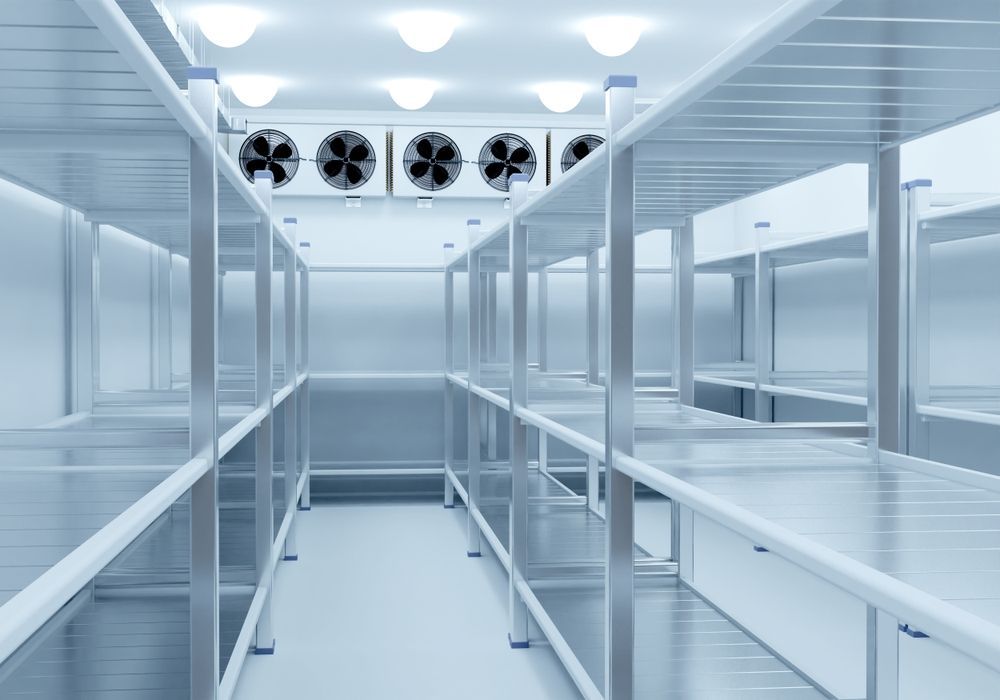
Commercial refrigeration systems operate on the same vapor-compression cycle as residential equipment, but the scale and configuration introduce failure points that a residential-only approach will miss. On a walk-in cooler, the evaporator coil is typically mounted inside the box while the condensing unit sits outside or on a rooftop, meaning a temperature problem has to be traced across both locations. On a reach-in unit, the condensing unit is often tucked beneath the cabinet or at the rear, where restricted airflow from blocked vents or a failed evaporator fan motor can mimic the symptoms of a refrigerant problem.
Once the fault is isolated, the observable change is direct: the box returns to its set-point temperature, the compressor cycles at normal intervals rather than running continuously or short-cycling, and the condensate pattern on the evaporator coil returns to normal. For food service businesses in Ceres—restaurants, markets, and catering operations that depend on consistent cold storage—those are the indicators that the system is working correctly again, not simply running.
Commercial refrigeration work often involves refrigerants subject to EPA Section 608 handling requirements, which means the technician recovering, recharging, or adding refrigerant must hold an EPA 608 certification. United Heating and Air addresses refrigerant handling requirements as part of the service discussion. Businesses with multiple refrigeration units or a combination of walk-in and reach-in equipment should describe the full equipment list when calling, so the scope of the diagnostic visit is set accurately.
What Businesses Ask About Refrigeration Service
These questions address how commercial refrigeration diagnosis and repair is performed and what to watch for during and after service.
What does a technician check first on a walk-in cooler that is running but not holding temperature?
The diagnostic starts with the condensing unit—checking refrigerant pressure, compressor amp draw, and condenser coil condition—then moves inside to the evaporator fan and coil before the controls are evaluated, because each stage in that sequence can produce the same symptom.
How does restricted airflow affect a refrigeration system differently than a refrigerant leak?
Restricted airflow raises the condensing temperature, which forces the compressor to work against higher head pressure and can eventually cause it to trip on its high-pressure cutout, while a refrigerant leak drops suction pressure and causes the evaporator coil to ice over—two different failure patterns that require different repairs.
Why does a reach-in unit sometimes ice up at the evaporator even when the box temperature is too warm?
Ice buildup on the evaporator coil usually points to a defrost system failure—either the defrost heater, the defrost timer or control, or a defrost termination thermostat—rather than a refrigerant problem, and replacing refrigerant without addressing the defrost cycle will not resolve the underlying fault.
What should a business verify after a refrigeration repair is completed?
Confirm that the box reaches and holds its set-point temperature across a full operating cycle, that the evaporator fan is running and distributing air evenly through the cabinet, and that the compressor is cycling on and off rather than running continuously.
How does the age of commercial refrigeration equipment affect the repair-versus-replace decision?
Older units using R-22 refrigerant present a practical constraint because R-22 is no longer manufactured domestically and available supply is limited and expensive, so a significant refrigerant loss on an older R-22 system changes the repair economics in a way that the same leak on a current-refrigerant unit would not.
United Heating and Air also performs commercial refrigeration services in Merced, Modesto, Oakdale, Ripon, and Turlock. To arrange a diagnostic visit for your refrigeration equipment, call United Heating and Air at (209) 505-0385 and describe the unit type and the problem you are observing.