
Ductwork Repair
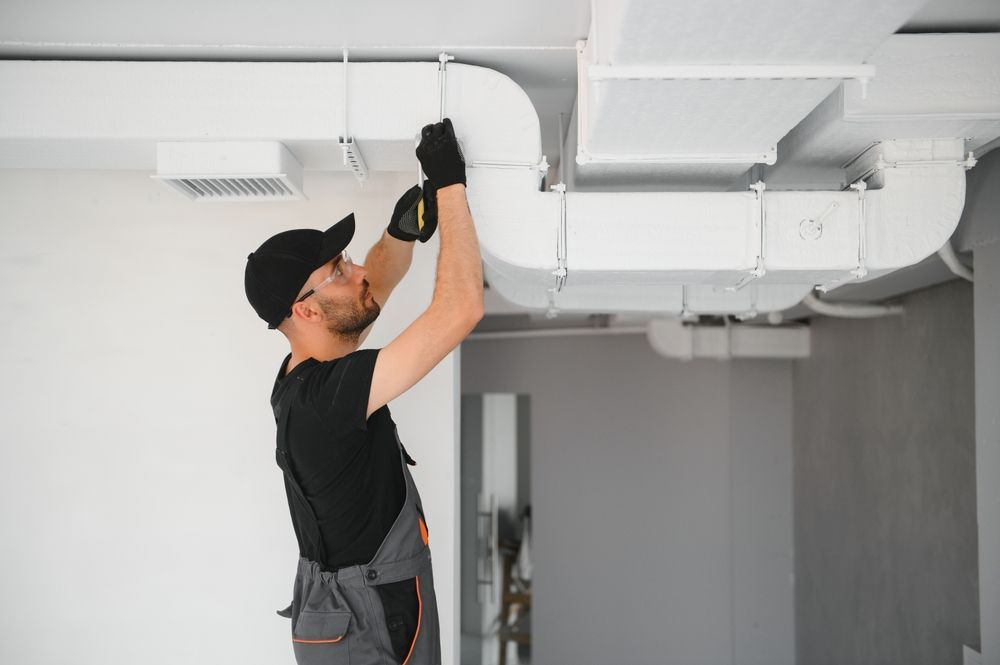
Rooms That Stay Wrong Signal Duct Problems
Ductwork Repair in Ceres for leaking, disconnected, or undersized duct systems causing uneven room temperatures
Attic-mounted ductwork in older Ceres homes was often installed during an era when duct sizing was calculated for the original floor plan and original equipment. When a home has been remodeled, when rooms have been added, or when the HVAC equipment has been replaced with a higher-capacity unit, the existing duct system may no longer match the load it is being asked to carry. United Heating and Air, a C-20 licensed contractor based in Ceres, repairs leaking, disconnected, and undersized ductwork for homes and qualifying businesses across the Central Valley—and the company traces airflow problems back to the duct system before recommending equipment replacement.
The technician pulls supply registers, inspects the duct run and plenum, and checks return airflow before quoting the repair. Leaks are sealed at the joints, damaged sections are replaced, and airflow is retested after the repair is complete. That retest step is where the repair is actually validated—a duct joint that was resealed but not verified under operating pressure may hold for one season and fail at the same point the next.
Arrange an airflow inspection to identify where the duct system is losing conditioned air before it reaches the problem rooms.
Why Duct Problems Outlast Equipment Replacements
A new air handler or condenser installed on a leaking duct system delivers its output into the attic, not into the rooms. That is the most common reason a home that just had its HVAC equipment replaced still has rooms that do not reach set temperature. The duct system is not replaced automatically when equipment is upgraded, and a contractor who does not inspect the duct run before recommending new equipment is skipping the step most likely to explain the underlying complaint.
After duct repairs are completed, rooms at the far end of the supply run—the ones that stayed warm in summer or cold in winter—should reach temperature within the same window as the rooms closest to the air handler. Airflow that was previously audible as a whistle or hiss at a register often goes quiet once the joint upstream has been properly sealed.
Duct repairs include joint sealing, section replacement where material has deteriorated, and a post-repair airflow verification. Duct insulation condition is also assessed during the inspection, since insulation that has separated from the duct surface in an attic run contributes to temperature loss that persists even after leaks are sealed. Written pricing is provided before any approved work begins.
Common Questions About Duct Repair Work
Duct problems in Ceres homes are often misread as equipment failures because the symptoms—rooms that won't reach temperature, high utility use, weak airflow at registers—look the same regardless of cause. These questions address how the inspection and repair process actually works.
What does a ductwork inspection involve before a repair is quoted?
The technician removes supply registers to access the duct interior, inspects the plenum and individual runs for disconnections and leaks, and evaluates return airflow to determine whether the system is pulling and delivering air in the correct balance.
How are duct leaks sealed during the repair?
Joints are sealed with mastic compound or metal-backed tape rated for duct applications—not standard household tape, which fails under the temperature cycling inside an attic-mounted duct system.
Why does one room in a Ceres home stay warmer or cooler than the rest even when the system is running?
Rooms at the end of a long supply run lose pressure by the time air reaches the register, and any leak between the air handler and that room diverts conditioned air before it arrives; the room farthest from the unit is typically the one that shows the problem first.
When does duct repair make more sense than duct replacement?
Repair is appropriate when the duct material is structurally sound but leaking at joints or connections; replacement is required when the duct liner has collapsed, the flex duct has kinked beyond its useful shape, or the original sizing is too restrictive for the current equipment.
How do you verify airflow has actually improved after a duct repair?
Airflow at each supply register is tested under operating conditions after the repair, and the return air balance is rechecked to confirm the system is pulling the volume it is delivering—a register that improves while another worsens indicates a distribution problem that was not fully addressed.
United Heating and Air also repairs ductwork in Merced, Modesto, Oakdale, Ripon, and Turlock. Call (209) 505-0385 to schedule an airflow inspection and review written pricing for the repairs your duct system actually needs.