Furnace Installation and Repair
No-Heat Calls Handled From Diagnosis Through Replacement
Furnace installation and repair in Ceres for homes where the unit is failing, cycling off early, or no longer worth repairing
A furnace that shuts off before the house reaches temperature, a unit that trips repeatedly on its limit switch, or an igniter that lights and then goes out within seconds—these are diagnostic problems before they are parts problems. United Heating and Air installs and repairs furnaces in Ceres, and the same California C-20 licensed crew that handles a repair call can also complete a full replacement when the diagnosis makes that the more practical outcome. Working this way means the homeowner does not get a repair recommendation from one company and a replacement recommendation from another with no way to evaluate the difference.
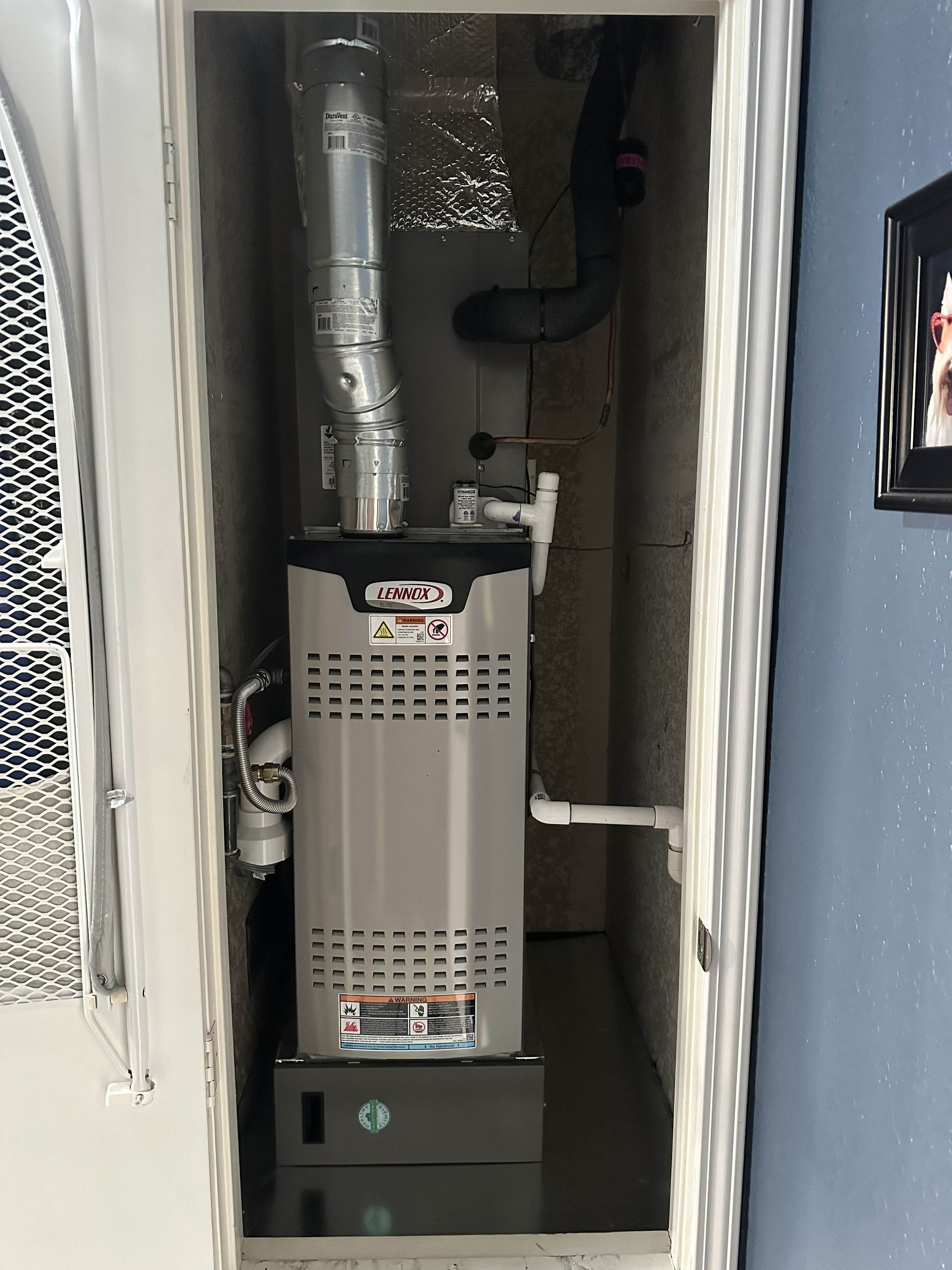
Repair calls begin with a systematic check of the ignition system or igniter, flame sensor, limit and safety switches, blower motor operation, and airflow through the supply and return. Many older Ceres and Modesto homes have furnaces installed in attic spaces or tight utility closets with ductwork routed overhead—a layout that was standard in Central Valley tract construction through the 1980s and 1990s. That configuration affects both access during diagnosis and the scope of a replacement, because the duct connections at the unit often need to be evaluated before a replacement unit is selected. Written pricing is provided before any approved work starts, whether the job is a repair or a full install.
Arrange a furnace diagnostic visit with United Heating and Air to identify what is causing the problem before any repair or replacement decision is made.
What Proper Furnace Diagnosis and Installation Requires
A furnace that keeps shutting off is typically doing exactly what its safety controls are designed to do—something in the system is triggering a limit switch or a pressure switch, and the unit is protecting itself. The diagnostic task is to identify which switch is tripping and why. A dirty flame sensor produces a fault that looks identical to a failed igniter from the outside; a cracked heat exchanger trips the high-limit switch in a way that resembles a dirty blower wheel; a blocked flue activates the pressure switch in the same way a faulty inducer motor would. Tracing the actual cause requires testing each component in the sequence the furnace uses to start, not replacing the most common part and hoping.
After a repair, the furnace completes a full cycle without tripping—the burner stays lit for the full call-for-heat, the blower runs through its post-purge cycle, and the unit goes off on thermostat satisfaction rather than a fault. After an installation, the new unit is sized to the home's heat load and the existing duct run, not simply matched to the outgoing unit's BTU rating—a step that matters when the original equipment was oversized or the duct configuration has changed. United Heating and Air carries a five-star Google rating across 37 reviews, and the C-20 license covers the gas connections, venting, and electrical integration involved in a furnace installation.
New installations begin with a load calculation and a review of the existing duct run before equipment is selected. In attic installations common to Central Valley homes, the duct connections, return air path, and the structural platform the unit sits on are all evaluated as part of the sizing process. California requires permits for furnace replacements in most jurisdictions, and United Heating and Air addresses permit requirements during the estimate.
Answers About How Furnace Work Gets Done
The questions below address how furnace diagnosis and installation actually works, including what gets checked, why the sequence matters, and what the finished work looks like.
What does a technician check on a furnace that keeps shutting off after a few minutes of running?
The diagnostic follows the startup sequence: ignition, flame sensor signal, heat exchanger pressure, limit switch temperature, and blower airflow—each step rules out one possible cause so the actual fault is identified rather than guessed.
How does furnace location in an attic affect a repair or replacement job compared to a closet installation?
Attic installations require the technician to work in a confined space with restricted tool access, and duct connections running overhead rather than through a basement often involve flex duct that needs to be evaluated for collapse or disconnection as part of the diagnosis.
Why is heat load sizing important when replacing a furnace rather than simply matching the old unit's capacity?
An oversized furnace short-cycles—it heats the air too quickly, shuts off before the house reaches an even temperature, and runs the blower in short bursts that circulate air unevenly, so a load calculation ensures the replacement unit matches the actual demand of the home.
What should you check after a furnace repair to confirm the problem is resolved?
Run the unit through at least two full heating cycles and verify that it lights without hesitation, runs to thermostat satisfaction rather than shutting off early, and does not produce a burning smell or unusual noise during the blower phase—those three observations confirm the repair addressed the actual fault.
How does the condition of existing ductwork affect a new furnace installation?
If the supply or return duct is undersized for the replacement unit's airflow rating, the new furnace will develop high static pressure that stresses the blower motor and reduces efficiency, so the duct run is measured and evaluated before equipment is selected rather than after.
United Heating and Air also installs and repairs furnaces in Merced, Modesto, Oakdale, Ripon, and Turlock. To set up a diagnostic visit or request an installation estimate, call United Heating and Air at (209) 505-0385 and describe the furnace behavior you are seeing.