Thermostat Installation
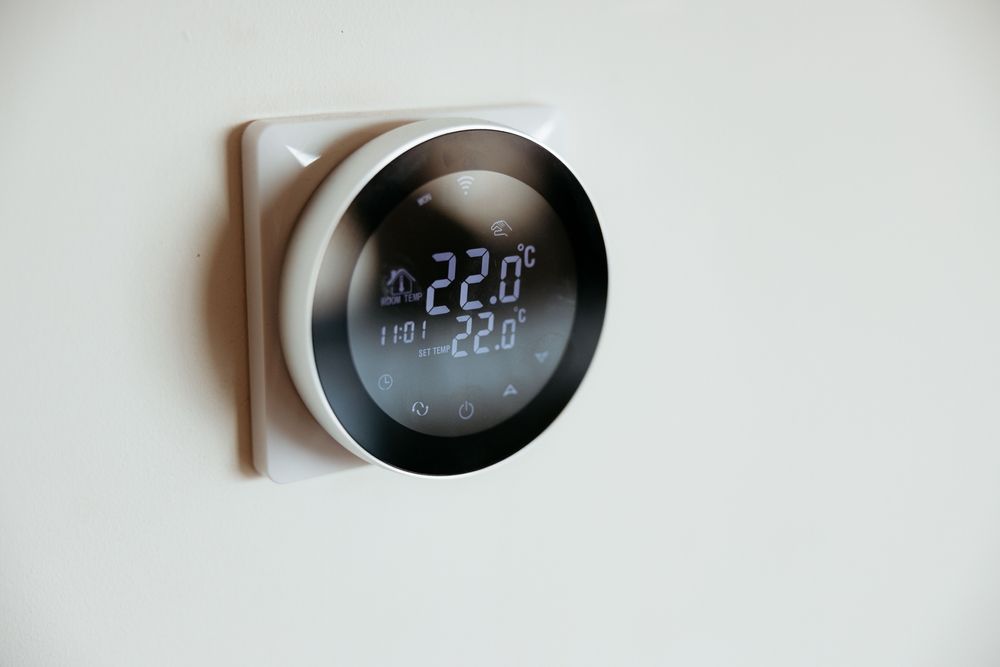
A Thermostat That Actually Matches Your System
Thermostat installation in Ceres for homes where compatibility between new controls and existing HVAC equipment determines whether the system runs correctly
Replacing a thermostat looks straightforward until the wiring doesn't match what the new unit expects. Smart thermostats in particular require a continuous 24V power source — commonly called a C-wire — that many older HVAC systems weren't wired to provide at the thermostat location. United Heating and Air handles thermostat installation in Ceres by confirming wiring and equipment compatibility before the new unit is configured, which prevents the most common failure mode: a smart thermostat that reboots repeatedly or loses its schedule because it can't maintain a stable power connection.
The technician checks the existing wiring color-for-color against the new thermostat's terminal map, confirms whether a C-wire is present or needs to be added, and verifies that the heating and cooling equipment will respond correctly to the control signals the new unit sends. That compatibility check also catches staging mismatches — a two-stage furnace paired with a single-stage thermostat will run at one speed regardless of demand, which affects both comfort and equipment wear. Written pricing is provided before work begins.
Schedule a wiring and compatibility assessment to determine which thermostat options work with your existing equipment before selecting a unit.
Why [Thermostat] Compatibility Determines Long-Term Performance
The installation itself involves more than mounting the new unit and connecting wires. After wiring is confirmed and connected, the thermostat must be configured to match the system type — heat pump systems require the thermostat to distinguish between heating mode and auxiliary heat, and that configuration setting determines how the equipment responds during demand cycles. A thermostat set to a conventional system configuration on a heat pump installation will either call for auxiliary heat when it isn't needed or fail to call for it when the heat pump can't keep up on its own.
Once the installation is complete and the configuration is verified, the system should respond to set-point changes with the correct equipment running — the right stage, the right mode, and no error codes on the thermostat display. Homeowners with smart thermostats can also verify the connection is stable by checking that the unit holds its schedule through a power interruption, which confirms the C-wire or adapter is delivering continuous power rather than relying on battery backup alone. United Heating and Air walks through the basic operation of the new thermostat after installation so the homeowner knows what normal looks like.
Not every smart thermostat is compatible with every HVAC system, and compatibility isn't determined by brand or price point alone — it's determined by terminal configuration, system staging, and whether the heat source is a furnace, heat pump, or dual-fuel setup. Bringing the model number of an existing unit to the compatibility check, or letting the technician assess the equipment directly, produces a more reliable recommendation than relying on the compatibility checkers found on thermostat manufacturer websites, which don't account for wiring condition or staging configuration.
Answers About How the Installation Works
The questions below address the installation process, wiring considerations, and how compatibility is confirmed before a new thermostat is set up.
What happens if the existing wiring doesn't include a C-wire for a smart thermostat?
The technician can run a new C-wire from the air handler to the thermostat location, use an add-a-wire adapter that repurposes an existing wire terminal, or identify thermostat models that operate reliably on battery or power-stealing circuits — the right solution depends on the wiring run and equipment access.
How is system staging compatibility checked before installation?
The technician identifies how many heating and cooling stages the existing equipment supports by reviewing the terminal connections at the air handler or furnace control board, then confirms the new thermostat has matching stage outputs and is configured to use them correctly after installation.
Why does a heat pump system require a different thermostat configuration than a gas furnace?
Heat pump thermostats must manage a reversing valve and differentiate between compressor-only heating and auxiliary resistance heat — a conventional thermostat configuration doesn't send those signals, which causes the system to run inefficiently or fail to activate auxiliary heat when outdoor temperatures drop.
What should you check once the new thermostat is installed and running?
Cycle the system through a full heating and cooling call at the thermostat and confirm the correct equipment responds — the outdoor unit for cooling, the furnace or heat pump for heating — and check that the display shows no error codes after the cycle completes.
How does older wiring in Ceres homes affect thermostat installation?
Homes built before four-wire thermostat runs became standard may have two- or three-wire configurations that limit which thermostat models are compatible without adding a wire — the technician documents the existing terminal count before recommending a unit so the selection is based on what's actually in the wall.
United Heating and Air also installs thermostats in Merced, Modesto, Oakdale, Ripon, and Turlock. To set up a wiring assessment and get written pricing for your thermostat installation, call United Heating and Air at (209) 505-0385.